
5 Reasons Your Design Business Feels Chaotic (And How to Fix It)
I'm sure you can relate.
I got into interior design because I love it. The creativity, the transformation, the moment a client walks into a finished space and their jaw drops. THAT is why I am sure you love design, too.
But somewhere between the discovery calls, the vendor follow-ups, the client emails, the contractor miscommunications, and the never-ending to-do lists, the joy can start to feel buried. And instead of running a design business, it feels like the design business is running YOU.
Sound familiar? You are not alone. And more importantly, it is not your fault.
Chaos in a design business is almost never a talent problem. It is a systems problem. And the good news is that systems problems are completely fixable. Let's look at the five most common reasons design businesses feel chaotic, and exactly what to do about each one.
1. You Don't Have a Consistent Onboarding Process
Every new client is a fresh start, which sounds romantic until you realize you are rebuilding your entire process from scratch every single time. What do you send them first? When do you collect their questionnaire? How do you set expectations around communication and billing?
Without a structured onboarding process, these questions get answered differently every time. And inconsistency creates confusion, for your clients AND for you.
The fix: Build a client onboarding process you can repeat on autopilot. A welcome packet, a clear communication plan, a timeline, and a billing schedule that goes out the same way every single time. Your clients will feel more confident and you will feel more in control from day one.
2. Nothing Gets Written Down
How many times have you had a conversation with a client, a contractor, or a vendor and relied on your memory to track what was decided? And how many times has that bitten you?
When decisions live in your head, in text messages, or scattered across three different email threads, things fall through the cracks. And when things fall through the cracks on a design project, it costs you time, money, and client trust.
The fix: Everything gets documented. Meeting notes, approvals, change requests, vendor confirmations. If it is not written down somewhere everyone can access, it does not exist. A simple project management tool like Asana can change everything here.

3. Your Team Doesn't Know What to Do Next
If your team is constantly coming to you to ask what they should be working on, that is a systems problem. It means tasks are not clearly assigned, deadlines are not set, and there is no single source of truth for what needs to happen and when.
This creates bottlenecks, delays, and a whole lot of unnecessary back and forth that eats your day alive.
The fix: Every project needs a task list with responsibilities and due dates assigned from the very beginning. When your team knows exactly what is expected of them and when, they can work independently and you can focus on actually designing.
4. You Are Not Asking the Right Questions Upfront
Here is a scenario I see ALL the time. A designer gets three weeks into a project and the client suddenly reveals something that changes everything. They hate overhead lighting. The room needs to function as a guest bedroom too. They have a dog the size of a small horse and every fabric choice needs to be reconsidered.
None of this is the client's fault. They did not know what information you needed. That is on the process.
The fix: Use in-depth, room-by-room questionnaires that dig into how spaces are actually used, what has not worked in the past, and what matters most to the client. Get this information in week one, not week six. It will save you hours of revisions and a lot of uncomfortable conversations.
5. You Have No Visibility Into Your Finances
If you do not know your profit margins, your monthly break-even number, or which services are actually making you money, you are running your business blind. And when business slows down even a little, that lack of visibility turns into full-blown panic.
Profitable designers review their financials every single month. Not because they love numbers, but because knowing your numbers gives you the clarity and confidence to make smart decisions about your business.
The fix: Set aside time every month to review your P&L, check your cash flow, and look at your margins by project type. Even 30 minutes a month can completely change how you see and run your business.
Here is the truth. None of these problems are unique to you. Every designer I have ever worked with has struggled with at least one of them, usually all five. The difference between the designers who stay stuck and the ones who build thriving businesses is simple: the successful ones put systems in place to fix them.
And that is exactly what I am here to help you do.
If any of this resonates, here is the best place to start:
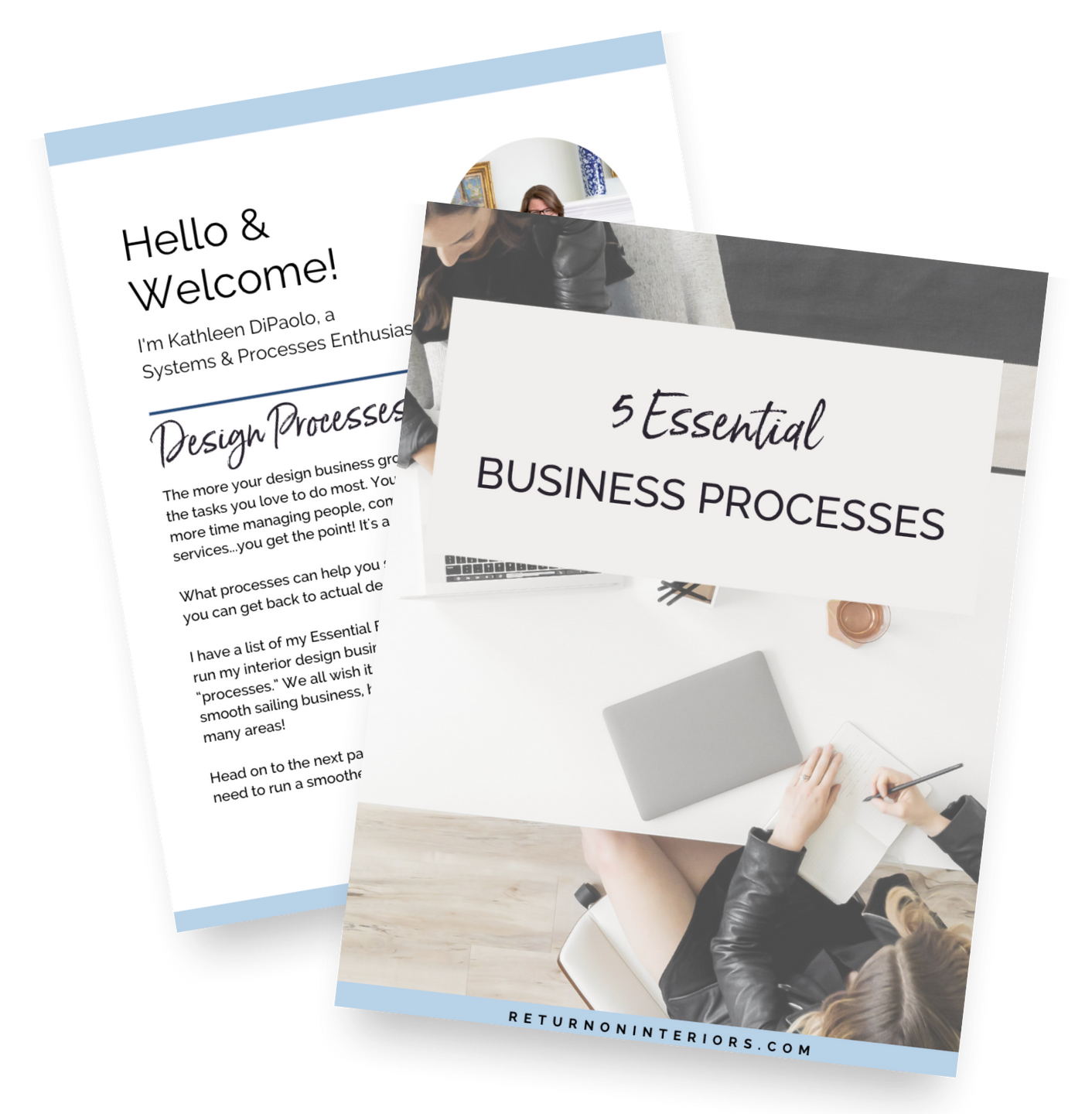
My FREE 5 Essential Business Processes guide covers the five core processes every design business needs to run smoothly. It is the starting point for everything I teach and it will give you a clear picture of exactly where to focus first.

And when you are ready to go deeper, the Design Project Blueprint has everything you need to build a fully systemized design business from the ground up.

P.S. The designers who get out of chaos fastest are the ones who stop trying to figure it all out alone. That is exactly what ROI is here for. Grab the free guide and get started!
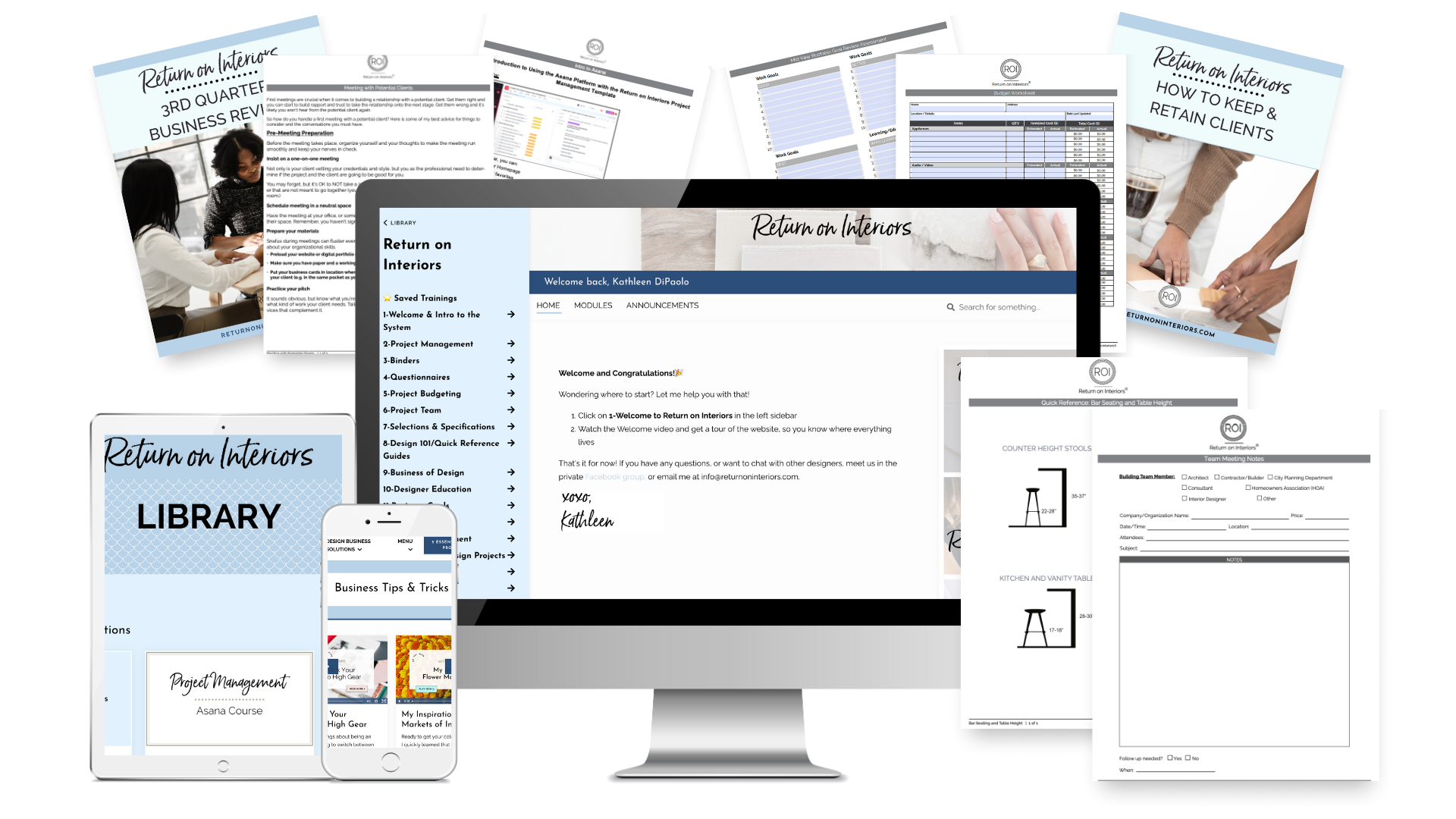
Get the Free Sample Pack
Eight tools built to make sure nothing gets lost between you, your client, and your trades.

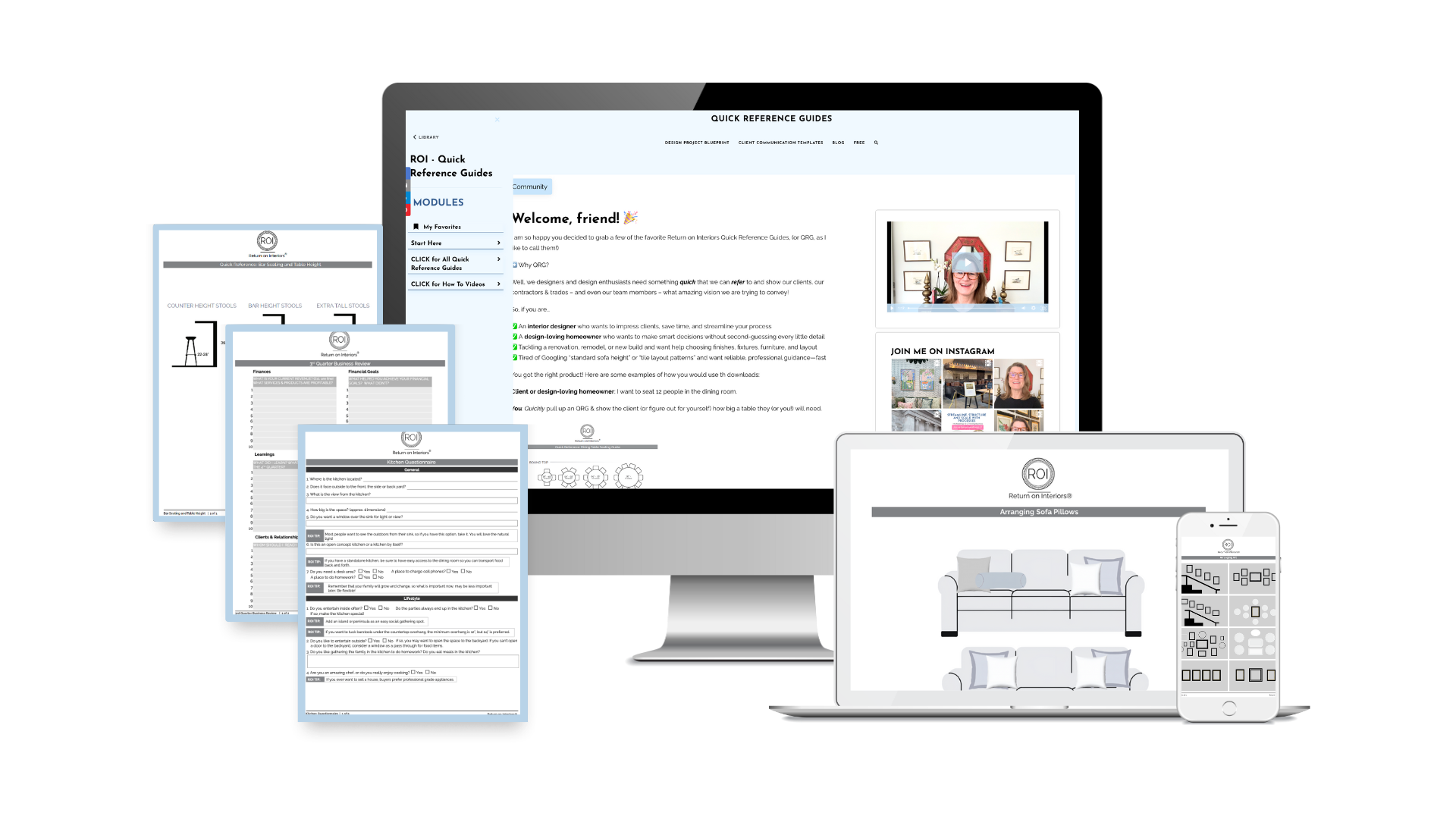
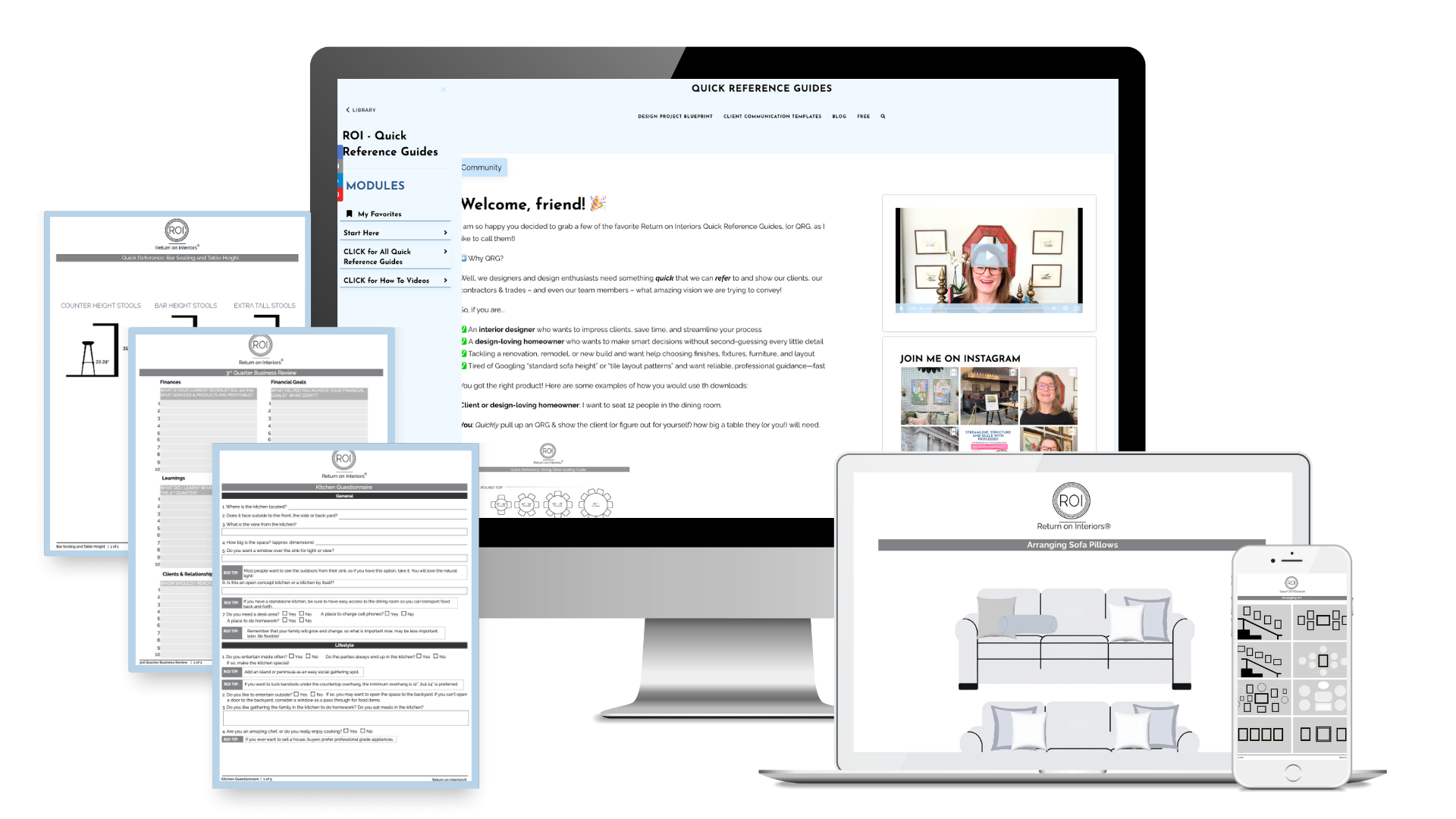
Quick answers without the googling
49 Quick Reference Guides for interior designers. Visual, printable, and ready to use.