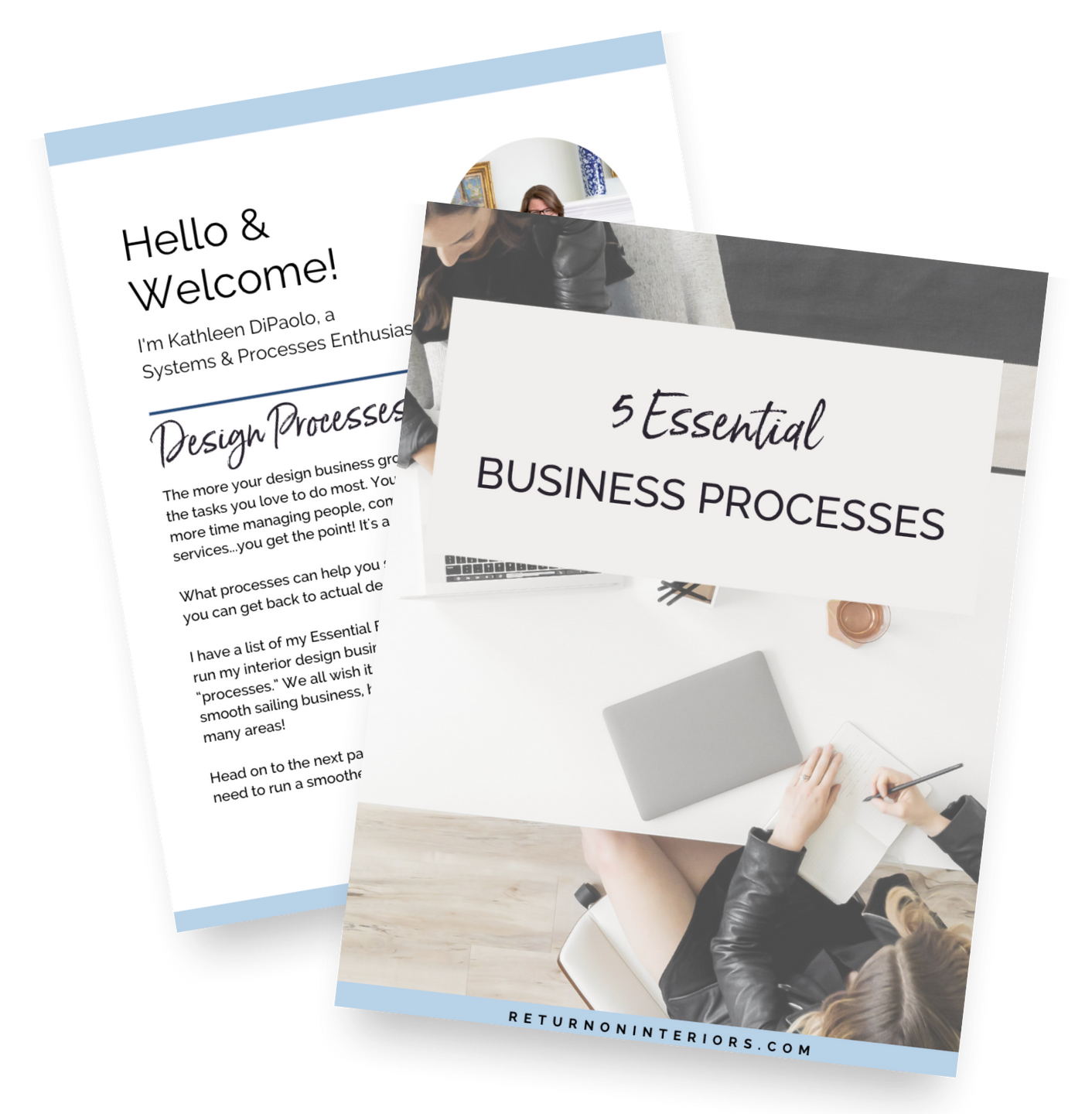

The Top 5 Processes for Your Design Business
Running a successful interior design business takes a lot. And without the right systems in place, it can also be completely overwhelming. We talk about processes constantly, but which ones actually move the needle? Here are the 5 that make the biggest difference.
1. Timelines
There are SO many steps in a design project, from the initial consult to the big reveal. Without a written timeline, you're reinventing the wheel every single time and hoping nothing falls through the cracks.
You need timelines for three project scales: small (a room or two, decorating only), medium (full house decorating or kitchen/bath renovation), and large (full construction and design, soup to nuts). You'll adjust for each project, but having that framework already in place saves time, protects your margins, and gives you serious peace of mind.
2. Budgeting
How do you find out what your client's budget REALLY is? How do you help them understand why a project costs what it does? You need a process for that.
I use a range of product costs to help nail down what clients actually have to spend on furnishings, and a similar range to help them decide where to splurge and where to save. Then I have a budget worksheet to keep it all on track throughout the project. Coming in on budget, or even slightly under, keeps clients happy. And happy clients send referrals.
3. Customer Service
Client care is the number one priority in any service business. You want to blow their minds, not just with the finished space, but with how they felt throughout the entire process.
I keep a spreadsheet for every client: family members (including the four-legged ones), birthdays, anniversaries, favorite flowers and wines. I get that information through my client onboarding process, which includes an in-depth questionnaire and a focused interview.
From there, a client care process runs the entire length of the project. Branded notebooks and candles at meetings. Specific moments for gifts and check-ins. Special occasions noted and acknowledged. When it's all mapped out in advance, NONE of it gets forgotten. And trust me, your clients will notice every bit of it.
4. Checklists
How many times have you arrived at an installation only to realize someone forgot light bulbs? Then the rug pad. Then the tape measure.
A solid installation checklist eliminates ALL of that. Mine covers every physical item we need on site, but it also reminds my team to check for full toilet paper rolls, wine in the fridge, and long matches by the fireplace. Those details are what separate a good reveal from an unforgettable one. I would miss at least half of them without a checklist. That's how critical they are.
5. Communication
This one is last on the list but it might be the MOST important. Clear, consistent communication with your clients, your subs, your contractor, and your own team will head off almost every major problem before it starts.
My communications process includes a schedule for regular client emails, a system for keeping spec binders updated across the board, and reminders for personal touchpoints like birthday cards. Always over-communicate rather than under. Having a process for when and how keeps it manageable.
Those 5 processes, working together, are what keep a design business organized, efficient, and genuinely profitable. Start building them one at a time and watch what changes.


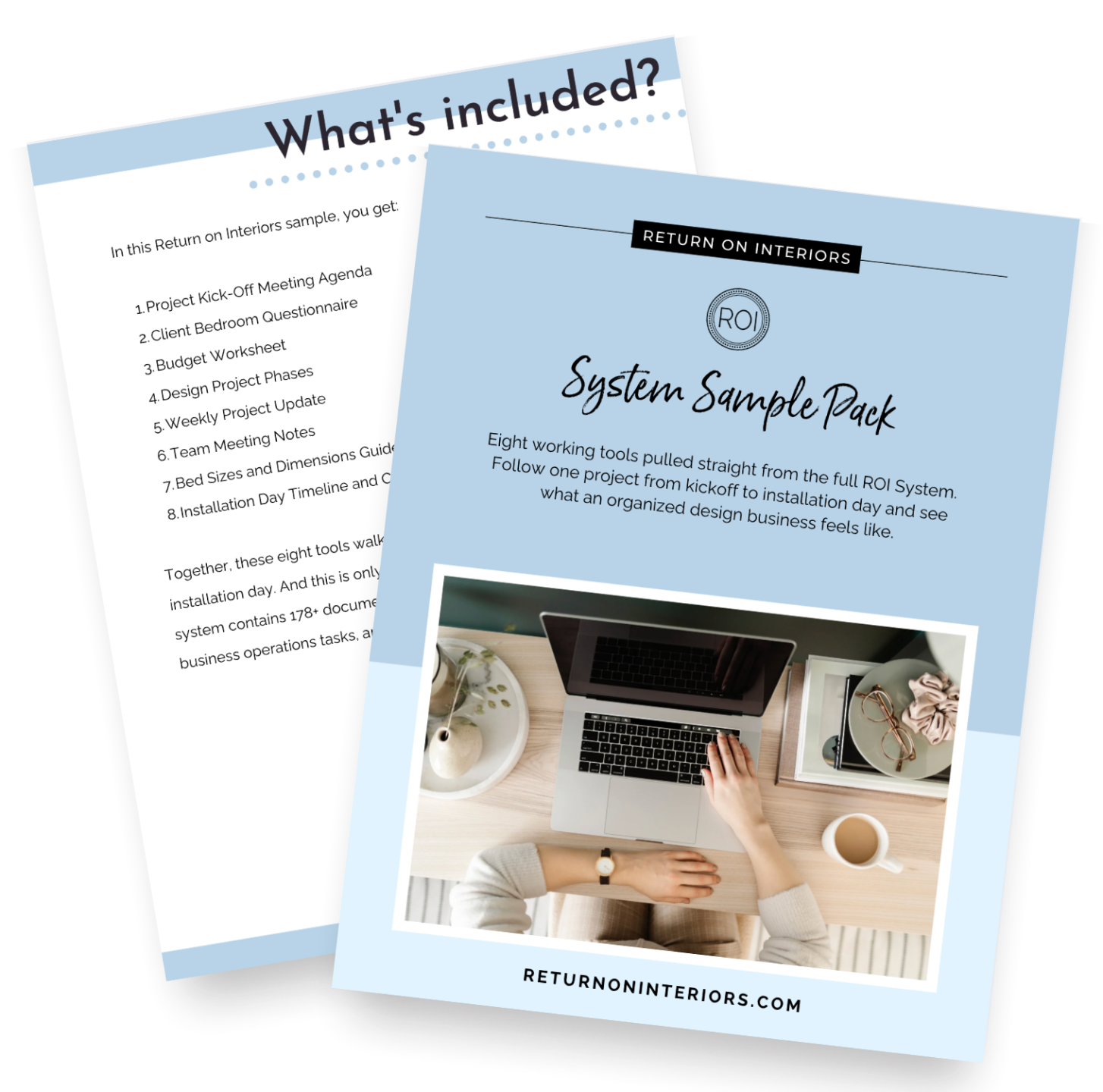
Get the Free Sample Pack
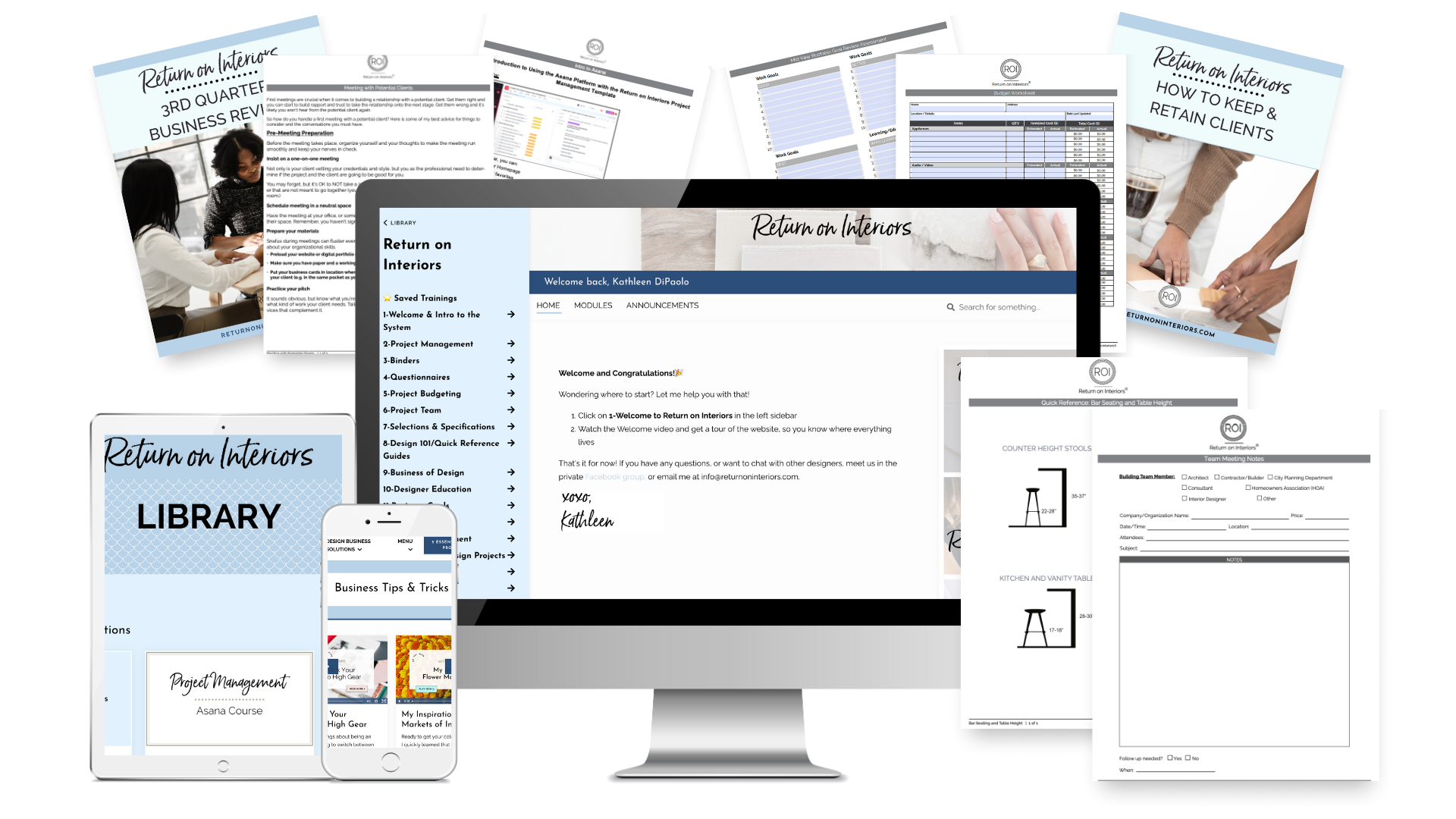
Eight tools built to make sure nothing gets lost between you, your client, and your trades.
Quick answers without the googling
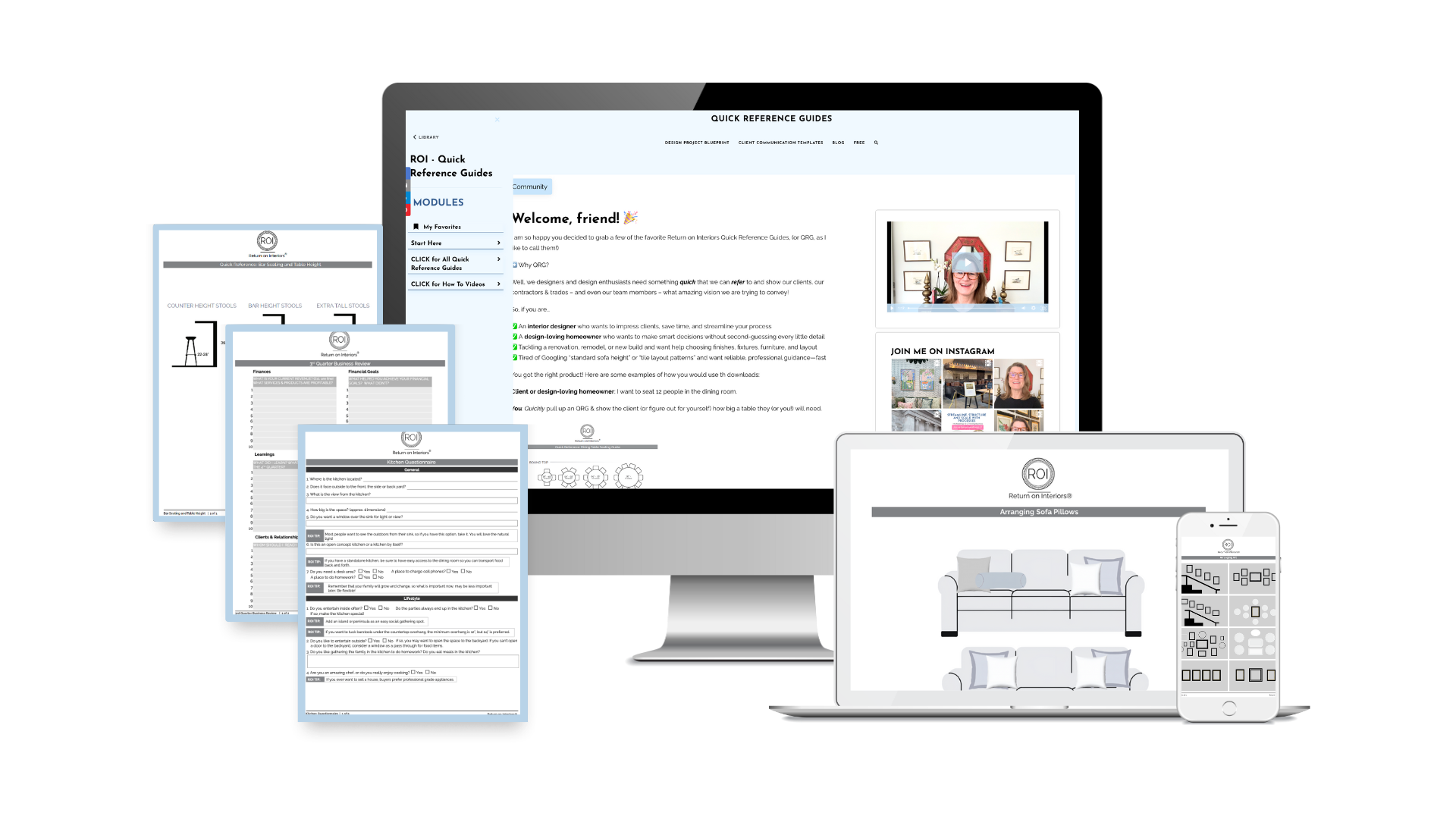
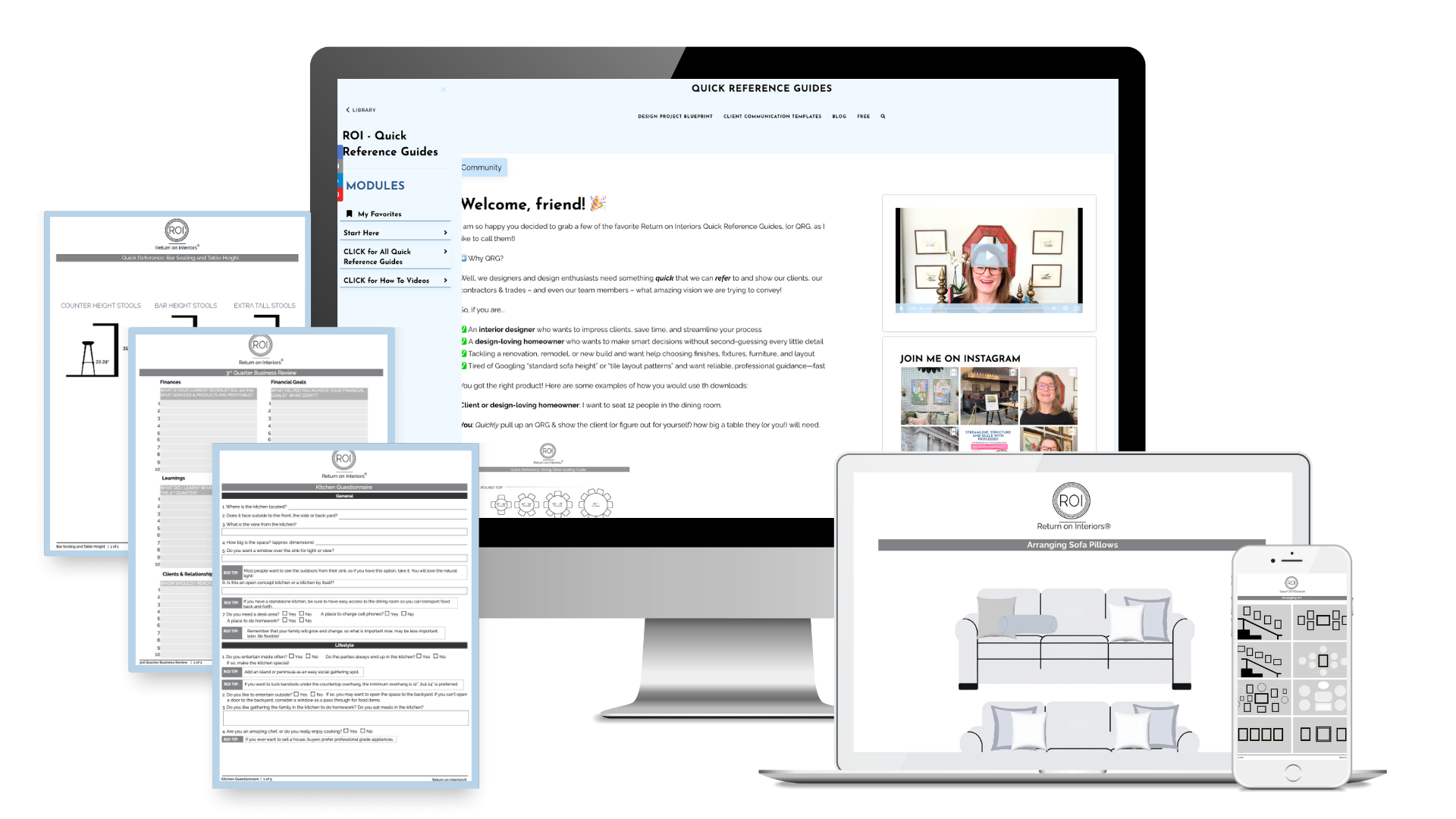
49 Quick Reference Guides for interior designers. Visual, printable, and ready to use.